
- This event has passed.
Snoop Dogg’s Bucketlist Experience at Desert Diamond Arena
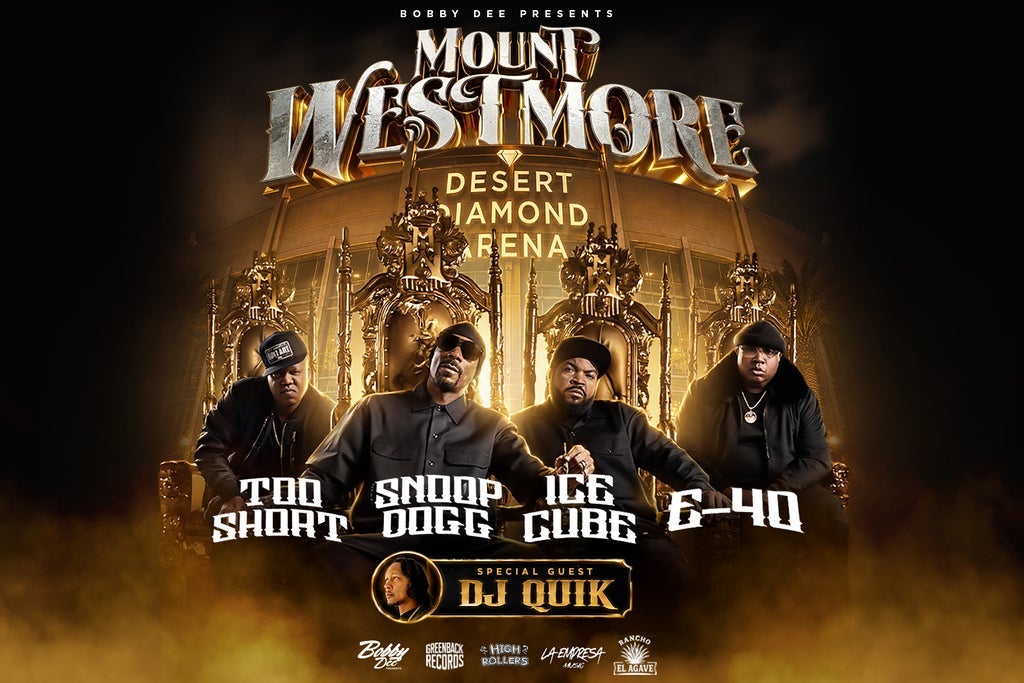
One of the most iconic figures to emerge from the early-’90s G-funk era, Snoop Dogg has evolved beyond his gangsta rap beginnings to become a lovable pop culture fixture with forays into television, movies, football coaching, and wrestling while expanding his musical reach far beyond his primary genre. Introduced through ‘s Top Five rap hit “Deep Cover” (1992), Snoop quickly became one of the most famous stars in rap, partially due to his drawled, laconic rhyming, and the realistic violence implied in his lyrics. His own Doggystyle (1993) become the first rap debut album to enter the Billboard 200 at number one, and featured the Top Ten pop hits “What’s My Name” and “Gin and Juice.” After the popularity of gangsta rap waned in the late ’90s, he proved himself to be a masterful chameleon, riding his pot-loving image in various directions that helped buoy his career through the 2000s. His biggest hits as a lead artist during the first decade of the 21st century included “Beautiful” (2003) and the chart-topping “Drop It Like It’s Hot” (2004), and he was also featured on a slew of major hits by fellow rappers, R&B crooners, and pop groups alike. The 2010s saw him branch out into reggae (2013’s Reincarnated), house (as a DJ), and gospel (2018’s Bible of Love), but he has remained hip-hop at his core, releasing projects in the 2020s such as The Algorithm (2021), his first album as executive creative consultant for , and BODR (2022), which marked a return to , his first label home. In 2024, Snoop released his 20th studio album, the -produced Missionary.
Nicknamed Snoop by his mother because of his appearance, Calvin Broadus was raised in Long Beach, California, where he frequently had trouble with the law. Not long after his high school graduation, he was arrested for possession of cocaine, beginning a period of three years when he was often imprisoned. He found escape from a life of crime through music. Snoop began recording homemade tapes with his friend , who happened to be the stepbrother of ‘s . gave a tape to , who was considerably impressed with Snoop’s style, and began collaborating with the rapper.
When decided to make his tentative first stab at a solo career in 1992 with the theme song for the film Deep Cover, he had Snoop rap with him. “Deep Cover” started a buzz about Snoop that escalated into full-fledged mania when released his own debut album, The Chronic, on late in 1992. Snoop rapped on The Chronic as much as , and his drawled vocals were as important to the record’s success as its P-Funk-inspired bass grooves. ‘s singles “Nuthin’ But a ‘G’ Thang” and “Dre Day,” which prominently featured Snoop, became Top Ten pop crossover hits in the spring of 1993, setting the stage for Snoop’s much-anticipated debut album, Doggystyle. While he was recording the album with in August, Snoop was arrested in connection with the drive-by shooting death of Phillip Woldermarian. According to the charges, the rapper’s bodyguard, McKinley Lee, shot Woldermarian as Snoop drove the vehicle; the rapper claimed it was self-defense, alleging that the victim was stalking Snoop. Following a performance at the MTV Music Awards in September 1993, he turned himself in to authorities.
After many delays, Doggystyle was finally released on in November of 1993, and it became the first rap debut album to enter the charts at number one. Despite reviews that claimed the album was a carbon copy of The Chronic, the Top Ten singles “What’s My Name?” and “Gin & Juice” kept Doggystyle at the top of the charts during early 1994, as did the considerable controversy over Snoop’s arrest and his lyrics, which were considered exceedingly violent and sexist. During an English tour in the spring of 1994, tabloids and a Tory minister pleaded for the government to kick the rapper out of the country, largely based on his arrest. Snoop exploited his impending trial by shooting a short film based on the Doggystyle song “Murder Was the Case” and releasing an accompanying soundtrack, which debuted at number one in 1994. By that time, Doggystyle had gone quadruple platinum.
Snoop spent much of 1995 preparing for the case, which finally went to trial late in the year. In February 1996, he was cleared of all charges and began working on his second album, this time without as producer. Nevertheless, when The Doggfather was finally released in November 1996, it bore all the evidence of a -produced G-funk record. The album was greeted with mixed reviews, and it initially sold well, but it failed to produce a hit along the lines of “What’s My Name?” or “Gin & Juice.” Part of the reason for the moderate success of The Doggfather was the decline of gangsta rap. , who had become a friend of Snoop’s during 1996, died weeks before the release of The Doggfather, and had left to his partner Suge Knight, who was indicted on racketeering charges by the end of 1996. Consequently, Snoop’s second album got lost in the shuffle, stalling at sales of two million, which was disappointing for a superstar.
Perhaps sensing something was wrong, Snoop began to revamp his public image, moving away from his gangsta roots toward a calmer lyrical aesthetic. He also began making gestures toward the rock community, signing up to tour with Lollapalooza 1997 and talking about two separate collaborations with and . The solo Da Game Is to Be Sold Not to Be Told, Snoop’s first effort on , followed in 1998; No Limit Top Dogg appeared a year later, and Dead Man Walkin’ the year after that. Tha Last Meal followed in December of that same year. The heavy release schedule resulted in varying musical quality from album to album, but by the turn of the century, Snoop had become such a cultural phenomenon that his albums became almost secondary to the personality behind them. An autobiography appeared in 2001, followed by a stream of movie roles in several high-profile pictures. Late in 2002, Snoop released his first album for , Paid tha Cost to Be da Bo$$. He then switched to for 2004’s R&G (Rhythm & Gangsta): The Masterpiece. The hit album spawned Snoop’s first number one single, the -produced “Drop It Like It’s Hot,” as well as the hit “Signs” with and . R&G was followed a year later by Welcome to tha Chuuch: Da Album, a collection of tracks from the Welcome to the Chuuch mixtape series. That same year, he hosted a West Coast peace summit in hopes of squashing all beefs.
In 2006, he appeared on ‘s Cali Iz Active and ‘s Laugh Now, Cry Later. Toward the end of the year, the intentionally leaked “My Peoples” freestyle appeared. The track paid tribute to many of those involved in Cali’s Latin rap community, so it was no big surprise when “Vato,” with ‘s , became his next album’s lead-off single. The hard and very G-funk Tha Blue Carpet Treatment triumphantly capped off a year of heavy West Coast activity. In late 2007, he recruited two hip-hop veterans — new jack swing legend and West Coast hero — and formed the production team QDT Muzic. The team oversaw Snoop’s 2008 album, Ego Trippin’, which included the single “Sensual Seduction.”
In 2009, he issued Malice N Wonderland, the maiden release of a new alliance with the reactivated label, which also signed him on as its creative chairman. He promoted the album a couple months prior to its street date when he hosted the live wrestling television broadcast WWE Raw. A year later, the CD/DVD set More Malice rounded up some odds and ends from the album and packaged them with a DVD featuring the Malice N Wonderland short film. He maintained his mainstream image with a star appearance on ‘s “California Gurls,” nabbing Snoop his third number one on the Billboard Hot 100. In 2011, he released Doggumentary, an album he considered the sequel to his classic debut. The record featured production from the likes of Swizz Beats, DJ Khalil, and Scott Storch, with guest artists including , , , and . Also arriving that same year was a feature film with , Mac + Devin Go to High School, along with its accompanying soundtrack.
After a 2012 trip to Jamaica, Snoop Dogg returned rechristened as , and with the help of producer , he released his first all-reggae album, Reincarnated, on in 2013. Another name change came later in the year when he became Snoopzilla and joined modern funkster for the project/album 7 Days of Funk. He returned to Snoop Dogg in 2015 when he partnered with for the hip-hop effort Bush. The album included the single “Peaches N Cream” and featured guest appearances from , , , and . Coolaid, a back-to-basics effort for which served as executive producer, was released in 2016. That same year, Snoop teamed up with Martha Stewart for VH1’s Martha & Snoop’s Potluck Dinner Party, a variety show that featured bits with guest actors and performances by hip-hop musical guests. The show aired into 2017, the same year that Snoop issued the simultaneously nostalgic and in-the-moment Neva Left, which referenced classics by and .
For his 16th set, Snoop once again changed course, this time dipping into the gospel world for 2018’s Snoop Dogg Presents Bible of Love. The collection featured guests from both the gospel and hip-hop worlds, topping the Billboard Gospel Albums chart upon release. A year later, Snoop returned to the streets for his 17th album, I Wanna Thank Me, a nostalgic set that celebrated his legacy while asserting his enduring place in contemporary hip-hop. In addition to guests and , the LP also included an appearance by the late . In 2020, while locked down in quarantine due to the global threat of COVID-19, Snoop released the restless single “I Wanna Go Outside,” setting his feelings of housebound frustration and concerns for the world’s health to a funky, old-school instrumental. The swaggering “C.E.O.” appeared in early 2021 on From tha Streets 2 tha Suites, a brief set which included appearances by , , and , and was released on April 20. Snoop was hired as ‘s executive creative consultant in June, and his first album with the label, The Algorithm, appeared in November. The sprawling set included guests such as , , , , and dozens of others. Snoop offered yet another album only four months later. The February 2022 release of BODR — short for “Bacc on Death Row” — coincided with Snoop acquiring the trademark rights to the label that issued his first two albums. 2022 also brought the debut album from supergroup , which included California rap legends Snoop, , , and . The appropriately named album Snoop Cube 40 $hort was first released via blockchain, but later found its way to streaming services with additional material. Snoop’s next solo effort was the 2024 album Missionary, his 20th album and one that reunited him with producer . As the duo neared the 30th anniversary of 1993’s groundbreaking Doggystyle, Missionary returned to the thick, party-focused, G-funk sound of Snoop’s earliest albums. Missionary included guest appearances from , , , , and , just to name a few. ~ Stephen Thomas Erlewine & Neil Z. Yeung, Rovi
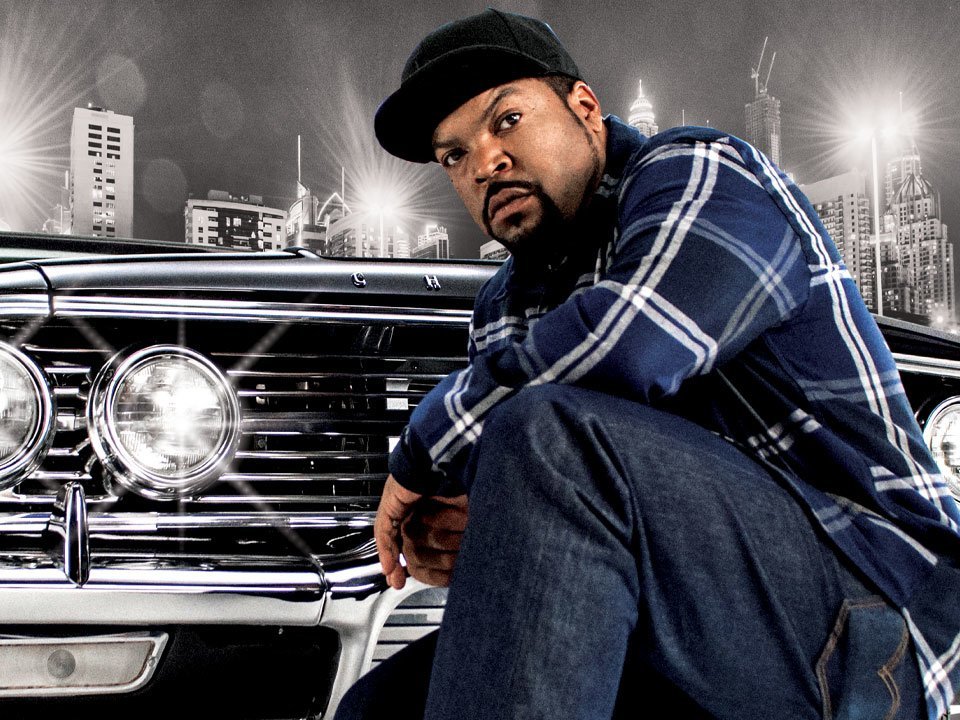
Ice Cube is one of the most crucial artists in rap history. A razor-sharp lyricist, an alternately furious and humorous MC, and an accomplished producer, Cube laid the foundation for the legacy of pioneering gangsta rap group by writing “Boyz-N-the-Hood” for partner and making his first big splash as an MC with the subsequent “Dope Man.” After ‘s Straight Outta Compton (1988) infiltrated suburban America and attracted the scrutiny of the FBI with “Fuck tha Police,” Ice Cube launched a solo career that has entailed five platinum albums and one platinum EP, including AmeriKKKa’s Most Wanted (1990), Death Certificate (1991), and The Predator (1992). A month before Cube released the first LP in that series, he appeared on ‘s critical “Burn Hollywood Burn” and within a year aided in the disruption of the track’s target with a co-starring role in John Singleton’s Boyz N the Hood. While Cube added to his filmography with projects such as the Friday franchise, his directorial debut The Players Club, and Barbershop, he devoted less time to music. He continued to record occasionally as a solo artist and as a member of , and extended a streak of RIAA-certified releases that lasted through Laugh Now, Cry Later (2006). The next decade, Cube and co-produced the acclaimed Straight Outta Compton (2015), a biographical film about , whose resurgence culminated with an induction into the Rock & Roll Hall of Fame. Cube soon returned with his first solo album in eight years, Everythangs Corrupt (2018) and formed the supergroup Mount Westmore. The typically vehement Man Down (2024) was his first solo album of the 2020s.
Raised in South Central Los Angeles, California by working class parents, Ice Cube, born O’Shea Jackson, became involved with b-boy culture in his early teens and in high school began writing rhymes. Cube rapped at parties hosted by , who soon produced his first recordings: Stereo Crew’s “She’s a Skag,” released on major-label in 1986, and an EP by C.I.A., issued in 1987 on the small independent . Stereo Crew and C.I.A. also featured , while the latter added . Along the line, Cube met through , and that trio, along with , formed the first lineup of , bolstered soon thereafter by and . and music industry veteran Jerry Heller set up , launched later in 1987 with a pair of 12″ releases: ‘s “Boyz-N-the-Hood,” and an EP from containing “8 Ball” and “Dope Man.” Cube was the MC only on “Dope Man,” but he was credited as sole lyricist on the three tracks, all of which demonstrated the writer’s flair for pointed narratives illustrated with irreverent humor.
By the time the Macola label expanded the tracks for the compilation N.W.A. and the Posse, Cube had headed to Arizona to study architectural drafting at Phoenix Institute of Technology. After he obtained a one-year degree, he returned to work on ‘s Straight Outta Compton and ‘s Eazy-Duz-It. Released by in August and September, respectively, 1988, the albums gradually crept into the mainstream, thanks in significant part to word of mouth and eventual support from Yo! MTV Raps. Nine months after its release, Straight Outta Compton peaked at number nine on Billboard’s R&B/hip-hop chart (trumping Eazy-Duz-It, which in March topped out at number 12). The extreme lyrical content of “Fuck Tha Police,” courtesy of Cube and , attracted scrutiny from the Los Angeles Police Department and eventually the assistant director of the FBI office of public affairs, who sent the group a strongly worded letter.
Deep conflicts with Jerry Heller prompted Cube to leave in late 1989. He went to New York with fellow producer and recorded his first solo album, heralded by an appearance on ‘s “Burn Hollywood Burn,” with the Bomb Squad. Released on in May 1990, AmeriKKKa’s Most Wanted was an instant Top 20 Billboard 200 hit and went gold within four months. While the album’s production and Cube’s mike skills were praised, the often violent, homophobic, and misogynist lyrics were criticized, particularly by the rock press and moral watchdogs. Even amid such controversy, the album was hailed as a groundbreaking classic — led by the title track, a number one hit on Billboard’s Hot Rap Singles chart — and established Cube as a recognized individual force. He began his own corporation, which was run by a woman, and by the end of 1990 co-produced a 12″ for and released the platinum Kill at Will EP. ‘s Make Way for the Motherlode, produced entirely by Ice Cube and , arrived the following year, as did another Cube-related project, I Wish My Brother George Was Here, the debut from cousin . Moreover, Cube made his widely praised acting debut in John Singleton’s groundbreaking urban drama Boyz N the Hood, titled after the song he wrote, filmed in his native South Central Los Angeles.
Cube’s first album may have been controversial, but its reception paled compared to that of his follow-up, Death Certificate. Released in October 1991, just after the debut went platinum, Death Certificate was more political, antagonistic, and vulgar than its predecessor, causing more scrutiny and outrage. In particular, “No Vaseline,” a vicious attack on and Jerry Heller, was perceived as anti-Semitic, and “Black Korea” was taken as an instruction to burn down Korean-owned grocery stores. The songs provoked a condemnation from the trade publication Billboard — the first time an artist had been singled out by the magazine. None of this prevented the album from reaching number two and going platinum with momentum maintained well into 1992 by “Steady Mobbin’,” a Top Ten rap hit. During 1992, Cube also performed in the second Lollapalooza tour to consolidate his white rock audience, executive-produced ‘s radical Guerillas in tha Mist, and that December appeared in Trespass and released The Predator. Cube’s third album, The Predator, became the first to debut at number one on both the pop and R&B/hip-hop charts. Promoted with three Top Ten rap singles — the ferocious Los Angeles riots response “Wicked,” the steady-rolling “It Was a Good Day,” and the collaboration “Check Yo Self” — the album eventually went double platinum.
Lethal Injection, Cube’s fourth album, was released in December 1993 and became the rapper’s third straight LP to debut within the Top Ten of the pop and R&B/hip-hop charts. Its biggest single, “Bop Gun (One Nation),” paid tribute to the enduring influence of Parliament- and featured leader . By the end of that year, Cube’s production discography included more material from , as well as ‘s Neva Again. Having released four albums in four years, Cube took a break from making solo LPs, but during 1994 reunited with for “Natural Born Killaz,” recorded for the Murder Was the Case soundtrack. Also that year, the November release Bootlegs & B-Sides bundled stray cuts. Cube was visible as ever throughout 1995. He acted in Singleton’s film Higher Learning, wrote and starred in the cult classic stoner comedy Friday, and appeared on tracks by partners and . Bow Down, ‘s first album, followed in 1996, narrowly missed the top of the pop chart, and went platinum on the strength of the hits “Bow Down” and “Gangstas Make the World Go Round.” In 1997, Cube starred in the action thriller Dangerous Ground and in the surprise hit horror film Anaconda, and contributed music to the soundtrack of the former, including “The World Is Mine,” joined by and . Another anthology, Featuring…Ice Cube, was out that December.
The Players Club, Cube’s directorial debut — which he also wrote — premiered in 1998, promoted with a Top Ten soundtrack featuring his own “We Be Clubbin’.” That November, just after he made a featured appearance on nu metal leaders ‘s “Children of the Korn,” Cube’s solo LP dry spell was broken with War & Peace, Vol. 1, the source of another rap number one, “Pushin’ Weight,” and an additional collaboration, “Fuck Dying.” Like all his previous LPs, it went platinum. Film work resumed with Next Friday, written and produced by Cube, who also reprised his starring role from the original and was present on the soundtrack. War & Peace, Vol. 2, containing a collaboration with and on “Hello,” followed in March 2000 and completed his prosperous phase with , swiftly summarized with Greatest Hits in 2001. Between studio albums, Cube devoted most of his creative energy to films. David O’Russell’s Three Kings, ‘s Ghosts of Mars, and Tim Story’s Barbershop, as well as a third Cube-written Friday film, Friday After Next — among several other titles — all appeared in theaters before he returned to music with ‘s second album, Terrorist Threats, in December 2003.
Signed to , Cube lengthened his solo discography in June 2006 with Laugh Now, Cry Later. In the Movies, a compilation of soundtrack cuts, was put together by for a 2007 release. The following August, Cube returned with Raw Footage, his seventh consecutive solo studio album to enter the Billboard 200 and R&B/hip-hop charts within the Top Ten. Yet another catalog title from , The Essentials, appeared in 2008. Cube’s September 2010 effort I Am the West was a family affair, with sons Darrell Jackson (aka Doughboy, named after Cube’s Boyz N the Hood character) and O’Shea Jackson, Jr. (aka ) among the guests, who also included longtime associate . By the end of 2011, Cube had also acted in and/or produced a multitude of projects for the large and small screens, including Are We There Yet?, Beauty Shop, Friday: The Animated Series, and The Longshots.
In 2012, Cube announced the imminence of a tenth solo album, Everythangs Corrupt. Despite several singles issued across 2013 and 2014, its release was delayed as Cube focused on film and television pursuits, as well as the legacy of . Along with , Cube worked on a biopic about the origin and rise of the trailblazing group, with son O’Shea Jackson, Jr. cast to portray him. Named after their breakthrough album, Straight Outta Compton was released in 2015 to critical acclaim. The film made over $200 million worldwide, and was nominated for an Academy Award in the category of Best Original Screenplay. The film inspired ‘s solo album Compton, which included Cube on the track “Issues.” A Rock and Roll Hall of Fame induction followed for in 2016. A 25th anniversary reissue of Death Certificate was released the next year by , Cube’s new home. The week of the 2018 midterm elections, Cube issued the single “Arrest the President,” a prelude to the characteristically scathing, humorous, and funky Everythangs Corrupt, which finally arrived the next month. He then teamed with Snoop Dogg, E-40, and Too $hort under the name Mount Westmore. The quartet released an album in 2020. Over the next few years, Cube continued with a handful of singles on which he teamed with the likes of , Cypress Hill’s DJ Muggs and B-Real, and Above the Law’s Cold 187um. “It’s My Ego” heralded the November 2024 arrival of Man Down. ~ Andy Kellman & Stephen Thomas Erlewine, Rovi
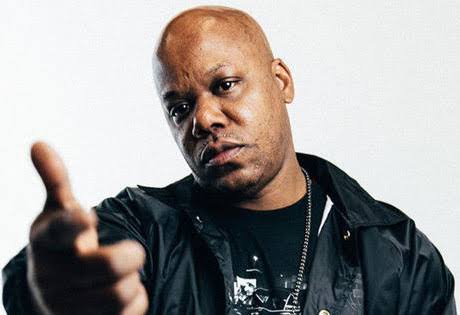
Too $hort was among the first West Coast rap stars, recording three albums on his own before he made his major-label debut in 1988 with the RIAA-certified gold Born to Mack. Anticipating much of the later gangsta phenomenon, he restricted his lyrical themes to explicit tales of sexual prowess and street life, with the occasional social message track to mix things up. Likely the only rapper to have recorded with , , and — all superstars indebted to his work — he has remained an inspiration for his vulgar verses and sparse instrumentals, remaining an iconic presence in the hip-hop landscape through the ensuing decades with projects like 2020’s collaboration Ain’t Gone Do It/Terms and Conditions.
Born Todd Shaw on April 28, 1966, Too $hort grew up in South Central Los Angeles. Soon after his family moved to Oakland in the early ’80s, he began selling tapes out of the back of his car. Signed to the local label , in 1985 he released his first proper album, Don’t Stop Rappin’. Two albums followed in the next two years, after which Too $hort formed his own Dangerous Music label with friend . He released Born to Mack in 1987, and sold more than 50,000 copies just by riding around the region. New York’s picked up on the buzz from across the country, and re-released the album one year later. With virtually no radio airplay, Born to Mack went gold and its follow-up, Life Is…Too Short, achieved platinum sales by 1989.
Immense underground success and nationwide distribution primed Too $hort for radio airplay. “The Ghetto,” from 1990’s $hort Dog’s in the House, made number 12 on the Billboard R&B/hip-hop chart and enjoyed a brief stay just outside the Top 40 of the Hot 100. The roll continued with 1992’s Shorty the Pimp and 1993’s Get in Where You Fit In, both of which went platinum. By the time of 1995’s Cocktails, however, Too $hort began to be drowned out by a glut of similar-sounding West Coasters, and though Gettin’ It (Album Number Ten) eventually became his sixth platinum album, by late 1996 he decided to retire. Three years later, however, he returned with Can’t Stay Away, which debuted in the Top Ten and went gold. Back for the long term, Too $hort released four albums during the next four years, then in 2006 scored one of his biggest hits with the -produced title track for Blow the Whistle. After Get Off the Stage was released in 2007, Too $hort returned to independence. During the 2010s, he issued the albums Still Blowin’, No Trespassing, the guest-loaded Hella Disrespectful: Bay Area Mixtape, The Sex Tape Playlist, and The Pimp Tape, on his Dangerous Music label. He rounded out the decade in 2019 with the release of his 21st studio album, The Vault. The next year he returned with fellow Bay Area legend on the collaborative mixtape Ain’t Gone Do It/Terms and Conditions. In addition to the two headliners, the tape included guest spots from , , , , and many others. ~ John Bush & Fred Thomas, Rovi
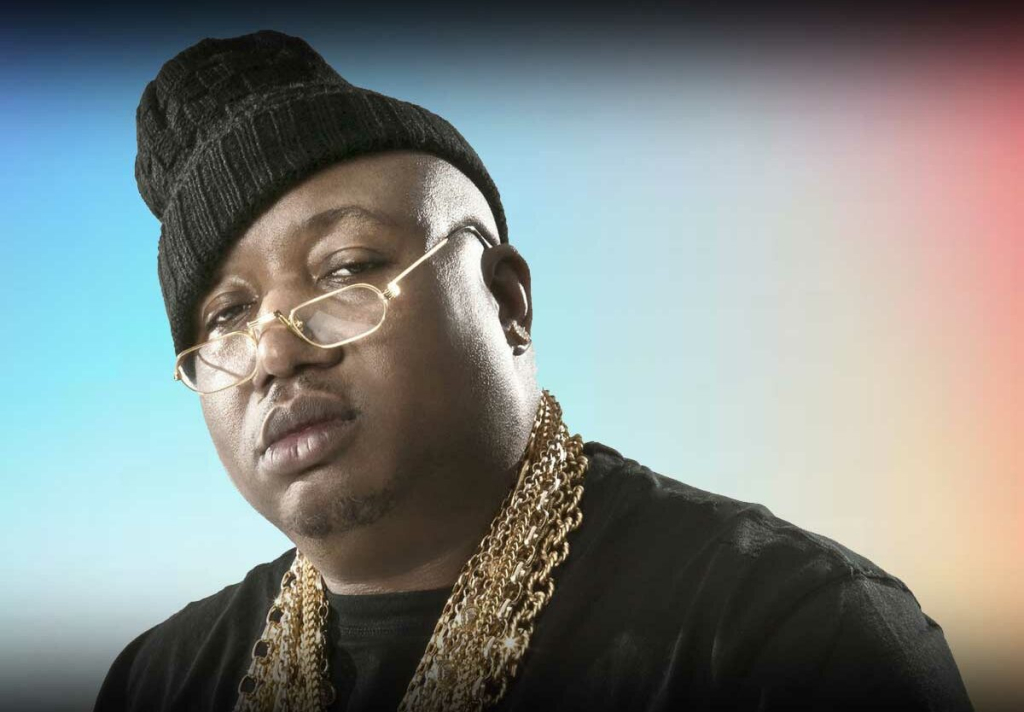
Synonymous with Bay Area rap, E-40 built a devoted regional following prior to gaining national exposure with flamboyant rhymes peppered by slang inventive and extensive enough to warrant a lexicon. Throughout his career, E-40’s entrepreneurial spirit has cultivated a flourishing scene in communities such as Oakland and his native Vallejo. Among the first Bay Area rappers to sign to a major label, E-40 went platinum with his first release for , 1995’s In a Major Way. Through the 2000s, he added to his major-label discography with albums that regularly debuted within the Top Ten of the R&B/hip-hop chart, highlighted by 1996’s Tha Hall of Game, 1998’s The Element of Surprise, and 2006’s My Ghetto Report Card, all three of which went gold. Each release proved highly influential, not only on the West Coast but also in the South. The breadth of the tracks on which he is featured, including ‘s platinum “Snap Yo Fingers” (2006) and ‘s multi-platinum “I Don’t Fuck with You” (2014), is another representation of the esteem in which he is held. Concurrently, the Bay Area rap scene, invigorated by the hyphy sound it cultivated, grew in popularity. It had no bigger champion than E-40, who continued to crank out multiple full-length projects on an annual basis, including 2010’s Revenue Retrievin’, 2012’s The Block Brochure, and 2016’s six-volume The D-Boy Diary. The Gift of Gab arrived in 2018, followed by 2019’s Practice Makes Paper, which hit number 32 on Billboard’s Top Hip-Hop/R&B Albums chart. Along with collaborations with , , and , he formed the supergroup with , , and in 2022, then issued the solo album Rule of Thumb in 2023.
Born Earl Stevens on November 15, 1967, in Vallejo, California, E-40 made his rap debut in 1990 on Let’s Side, an EP by . The EP was co-produced by Mike Mosley and Al Eaton. In 1993, E-40 made his solo album debut, Federal, a nine-track LP/14-track CD produced by Studio Ton and released by in association with (), a regional distributor. In 1994, on the strength of the regionally popular, independently released single “Captain Save a Hoe” (aka “Captain Save ‘Em Thoe”) from the six-track Mail Man EP, E-40 signed a recording contract with , the home of Bay Area pioneer since 1987. re-released “Captain Save a Hoe” on 12″ and also re-released the Mail Man EP, adding two bonus tracks; all the songs on the EP, including “Captain Save a Hoe,” were produced by Studio Ton, except one of the bonus tracks, “Ballin’ Out of Control,” which was produced by Mike Mosley and .
In 1995 alone, released four E-40 albums: a reissue of ‘s [RoviLink=”MW”]Down and Dir
ty[/RoviLink]; Game Related, a newly recorded album by ; a reconfigured version of Federal; and In a Major Way, a newly recorded album produced by Studio Ton, Mike Mosley/, and . Of these numerous releases, In a Major Way proved E-40’s breakthrough. Featuring a collaboration with fellow Bay Area hardcore rappers , , and , “Dusted ‘n’ Disgusted,” in addition to several songs that would also become fan favorites, the album sold over one million copies and took the rapper’s career to a new level of respectability.
Beginning with Tha Hall of Game (1996), E-40 released six additional solo albums on — The Element of Surprise (1998), Charlie Hustle: The Blueprint of a Self-Made Millionaire (1999), Loyalty and Betrayal (2000), Grit & Grind (2002), Breakin News (2003) — plus one further album by , Money & Muscle (2001). Over the course of these albums, E-40 maintained his regional following and picked up additional fans nationally. Besides “Captain Save a Hoe,” two of his singles charted on the Billboard Hot 100 (“1-Luv,” 1995; “Things’ll Never Change,” 1996). During the late ’90s, E-40 was also featured on Southern rap albums such as ‘s Lost, ‘s MP da Last Don, and ‘s My Homies in 1998 alone.
E-40’s ties to the South became most clear in 2006, after the expiration of his contract with , when he partnered with and his label for My Ghetto Report Card, released in association with The album — featuring production from as well as Bay Area beatmakers Droop-E, , Studio Ton, and — was E-40’s most successful in years, and it marked his return to the Billboard Hot 100 with a pair of impressively charting singles: “Tell Me When to Go,” featuring (number 35), and “U and Dat,” featuring (number 13). That year, he also appeared on ‘s platinum hit “Snap Yo Fingers.” His 2008 effort The Ball Street Journal featured the production “Break Ya Ankles” as its lead single, followed by the feature “Wake It Up.”
Two years later, E-40 returned with the Revenue Retrievin’ project, a double album split into two separate releases. The Day Shift version featured the more street-oriented cuts, while the Night Shift version was filled with club tracks. The project turned into a quadrilogy in 2011 with the simultaneous release of his 13th (the varied Revenue Retrievin’: Overtime Shift) and 14th (the very dark Revenue Retrievin’: Graveyard Shift) albums. A year later, he returned with another batch of releases, this time divided into three single discs titled The Block Brochure: Welcome to the Soil, Pts. 1, 2, and 3. The year 2014 saw the launch of a four-part album as Sharp on All 4 Corners: Corner 1 and Corner 2 landed. Sharp on All 4 Corners: Corner 3 and Corner 4 were scheduled for 2015 but were preceded the following year by “books” one and two of The D-Boy Diary. Meanwhile, E-40’s status as a venerable Bay Area fixture was sustained with appearances on hits by (the multi-platinum “I Don’t Fuck with You”), (“Saved”), and (“Law”).
In 2018, E-40 collaborated with for Connected and Respected, contributed to the soundtrack for the Oakland-set Blindspotting, and released the full-length album The Gift of Gab. Practice Makes Paper, promoted with “Chase the Money” — featuring , , , and — arrived the next year. He returned in May 2020 with the EP The Curb Commentator Channel 1, featuring appearances by , , , and . Terms & Conditions, a collaboration with , arrived that December and was followed in March 2021 by the single “I Stand on That,” featuring and . In 2022, he debuted his supergroup , comprising , , and . He also issued the singles “It’s Hard Not To” (with ) and “In the Air Where It’s Fair” (with ). Returning to solo work in late 2023, E-40 delivered another full-length, Rule of Thumb. ~ Jason Birchmeier & Andy Kellman, Rovi