

- This event has passed.
The Offspring + Jimmy Eat World & New Found Glory at Talking Stick Amp
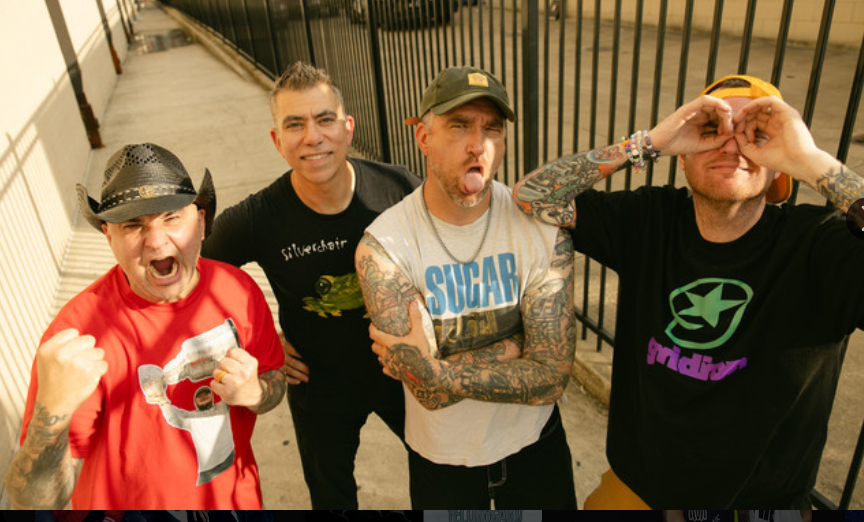
The Offspring is perhaps the quintessential SoCal punk band of the 1990s — survivors of the 1980s hardcore scene who revamped themselves for the heavier alt-rock era. Dexter Holland and Noodles had been kicking around the Orange County scene since the mid-’80s, adopting the name the Offspring as the band’s lineup firmed up toward the end of the decade. The group released their second album, Ignition, on Epitaph in 1992 but it was 1994’s Smash and its accompanying singles “Come Out and Play (Keep Em Separated)” and “Self Esteem” that pushed the band toward blockbuster national success. Shortly afterward, the Offspring made the leap to the major labels and continued a streak of snotty, satirical alt-rock hits such as “Pretty Fly (For a White Guy)” and “Why Don’t You Get a Job?” that kept the group squarely in the hard rock mainstream through the 2000s. By the dawn of the 2010s, the Offspring had experienced several membership changes, the first bit of turmoil that would extend through a decade marked by battles with record companies. The middle-aged Offspring reemerged in 2021 with Let the Bad Times Roll, their first album since 2012’s Days Go By. They followed in 2024 with Supercharged.
Featuring Dexter Holland, guitarist Kevin “Noodles” Wasserman, bassist Greg Kriesel, and drummer Ron Welty, the Offspring released their self-titled debut album in 1989. Four years later, their second album, Ignition, became an underground hit, setting the stage for the across-the-board success of 1994’s Smash. The Nirvana soundalike “Come Out and Play,” the first single from the album, became an MTV hit in the summer of 1994, paving the way to radio success. The Offspring were played on both alternative and album rock stations, confirming their broad appeal. “Self Esteem,” the second single, followed the same soft verse/loud chorus formula and stayed on the charts nearly twice as long as “Come Out and Play.” The group got offers from major labels yet chose to stay with Epitaph. While they were able to play arenas in the U.S., their success didn’t translate in foreign countries. Nevertheless, the band’s popularity continued to grow in America, as “Gotta Get Away” became another radio/MTV hit in the beginning of 1995. The Offspring recorded a version of the Damned‘s “Smash It Up” for the Batman Forever soundtrack in the summer of that year; it kept the group on the charts as the bandmembers worked on their third album.
Following a prolonged bidding war and much soul-searching, the Offspring decided to leave Epitaph Records in 1996 for Columbia. The move was particularly controversial within the punk community, and many artists on the Epitaph roster, including Pennywise and owner Brett Gurewitz, criticized the band. After much delay, the Offspring finally released their Columbia debut, Ixnay on the Hombre, in February of 1997. Expectations for the record were high and it did receive good reviews, but Ixnay on the Hombre failed to become a crossover hit on the level of Smash, and the group also lost a significant portion of its hardcore punk audience due to the album’s major-label status. Americana followed in 1998, scoring the hit “Pretty Fly (For a White Guy).” In mid-2000, the Offspring made controversial headlines with their decision to offer Conspiracy of One free of charge on the Internet prior to the initial November release date. Sony Music did not adhere to such a move and threatened a lawsuit, so the band nixed the plan to release the album in such a manner. Individual singles, however, were made available on the band’s official website and other music-related sites such as MTV Online.
The Offspring returned in 2003 with Splinter. The album was released through Columbia, proving the band’s flouting of the record biz hadn’t soured the major labels. It also featured the single “Hit That,” which returned to the smarmy, pop-referential feel of “Pretty Fly.” The Offspring toured the world in support of Splinter, and in the process they hit nearly every continent at least once. They returned in June 2005 with a greatest-hits set; in addition to their major hits, it included the new track “Can’t Repeat.” In 2008, after several delays, the band released its first studio release in four-and-a-half years, the highly anticipated Rise and Fall, Rage and Grace. While touring for in support, the Offspring set to work writing new material and recording when they could. After three years of work, their ninth album, Days Go By, arrived in the summer of 2012.
The Offspring then entered an extended period of touring, recording, lineup changes, and battling their record label. Summer Nationals, a digital EP of covers, appeared in 2014, the same year they negotiated a deal for the rights to the music they made at Columbia; in 2016, they sold these masters and all their publishing rights to Round Hill. The Offspring began working on a new album in earnest in 2018, reuniting with producer Bob Rock. The resulting Let the Bad Times Roll appeared on Concord in the spring of 2021, its release delayed due to the COVID-19 pandemic. Upon release, the set topped charts in Austria, the U.K., and the U.S. Seizing their newfound momentum, they returned to the studio after touring concluded, delivering their eleventh album Supercharged in 2024.
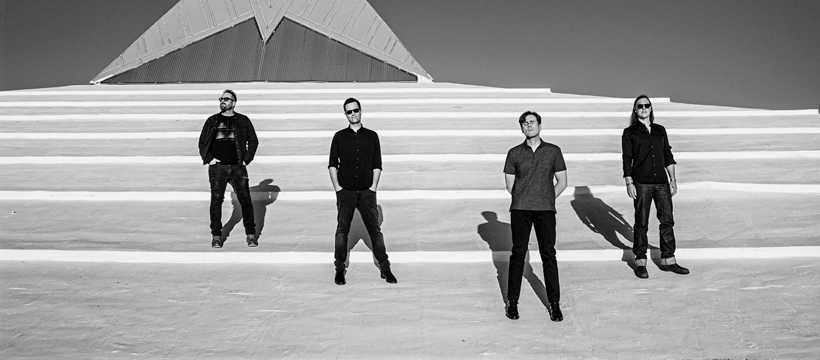
Emerging as a trailblazing name in the mid-’90s emo scene, Jimmy Eat World eventually found a larger audience by embracing a blend of alternative rock and power pop that targeted the heart as well as the head. The band’s influence widened considerably with 1999’s Clarity — an album that has since emerged as a landmark of the emo genre — but it was the follow-up, 2001’s Bleed American, and the infectious single “The Middle” that broke them into the commercial rock mainstream. The emo label proved difficult to shake throughout the 2000s, even when subsequent Top Ten albums Futures (2004) and Chase This Light (2007) did little to evoke the hard-edged sensitivity of Clarity, but Jimmy Eat World still remained a league above the generation of genre torchbearers they helped spawn. Settling into comfortable veteran status in the 2010s, the band continued to issue reliable Top 20 efforts, rounding out the decade with their tenth album, 2019’s Surviving.
Jimmy Eat World formed during 1993 in the Phoenix suburb of Mesa, Arizona. Jim Adkins (vocals/guitar) and Zach Lind (drums) met while attending Mountain View High School; years of playing in local bands had also introduced them to locals Tom Linton (guitar/vocals) and Mitch Porter (bass). The four musicians joined forces and derived the band’s moniker from an argument between Linton’s younger brothers, Ed and Jimmy. The two siblings were prone to fighting, with the heavyset Jimmy usually emerging as the victor. One day, a revengeful Ed resorted to drawing a picture of his heavyset older brother shoving the entire world into his mouth. The caption “Jimmy Eat World” was printed beneath, and the band deemed it a perfect fit. Citing influences like Rocket from the Crypt, early Def Leppard, the Jesus and Mary Chain, Fugazi, and the Velvet Underground, Jimmy Eat World outfitted themselves as a punk rock act and began playing small shows in the Phoenix valley.
Over the course of 1994 and early 1995, Jimmy Eat World released several EPs and singles on Wooden Blue Records, an imprint based in the nearby town of Tempe. Limited-edition pressings of “One, Two, Three, Four,” “Back from the Dead Mother Fucker,” and split EPs with Christie Front Drive, Emery, and Blueprint would later run out of print, as would the band’s self-titled debut album. Their audience was steadily growing, and Capitol Records responded by signing Jimmy Eat World in mid-1995, when bandleaders Adkins and Linton were only 19 years old. Porter soon exited the group; Linton’s best mate since seventh grade, bassist Rick Burch, was enlisted as a replacement, and the band marked their major-label debut with the release of 1996’s Static Prevails.
Three years passed; by 1999, Jimmy Eat World had officially transformed themselves into an emo outfit with the release of their intricate sophomore album, Clarity. The record marked Adkins‘ first time as the group’s lead singer and principal songwriter, two roles that Linton had previously handled. Unfortunately, Capitol Records had also experienced some significant changes, ultimately culminating in the departure of president Gary Gersh — the same man who signed Jimmy Eat World in 1995. Capitol‘s new management balked at Clarity’s sensitive sound and started to shelve the album; it wasn’t until several key radio stations (including L.A.’s influential KROQ) started airing the song “Lucky Denver Mint” that the label relented and released Clarity in February 1999. “Lucky Denver Mint” proved to be popular on the radio and in the movies, where it scored a spot in the Drew Barrymore comedy Never Been Kissed. Jimmy Eat World’s fan base continued to grow, but their relationship with Capitol progressively soured. After the label shelved the band’s third LP, Jimmy Eat World decided to leave the label, and Capitol was happy to let them go.
Meanwhile, Jimmy Eat World’s music was attracting an audience overseas, where Clarity had become a hit in countries like Germany. The band responded by financing and promoting a tour throughout the European continent. Singles, a collection of unreleased B-sides and rarities, was issued that same year on the independent label Big Wheel Recreation. A split EP with Australian rockers Jebediah was also released, and the group scraped together the profits from those ventures before entering the studio to record Bleed American (whose title would later be changed to Jimmy Eat World after the events of September 11, 2001). Enlisting the help of Clarity’s producer, Mark Trombino, the band independently created the record that would effectively launch their high-profile careers. Jimmy Eat World then used the completed product to land a contract with Dreamworks, who released the album in July 2001. While the hard-hitting title track did moderately well, it was the record’s second single, “The Middle,” that landed Jimmy Eat World a spot on the pop/rock map. Featuring a video filled with scantily clad teenagers, the song also enjoyed heavy exposure on MTV, where a younger audience latched onto the band’s summery appeal. A year after its release, Jimmy Eat World was still a fixture on the Billboard charts and modern rock radio. A third single, “Sweetness,” was released in summer 2002, and “A Praise Chorus” followed soon after, allowing the album to go platinum.
After the Dreamworks label closed its doors in January 2004, Jimmy Eat World shifted their operations over to Interscope for the release of their fifth album. Futures was released in October 2004 and debuted at number six on the Billboard charts, eventually going gold on the strength of the Top 40 hit “Pain.” The Stay on My Side Tonight EP appeared one year later, featuring a Heatmiser cover and several tracks that had been axed from the Futures track list. Jimmy Eat World continued to tour in support of the album before entering the recording studio with Butch Vig (Nirvana, Smashing Pumpkins, Garbage). With Vig behind the controls, Jimmy Eat World recorded their sixth studio LP, Chase This Light. The leadoff single, “Big Casino,” was released in August 2007, and the album followed in October. Before the release of their next record, the band embarked on a ten-year anniversary tour celebrating Clarity.
In 2010, Jimmy Eat World issued their seventh album, Invented (Dine Alone), which saw the return of Trombino as producer. This release marked the first instance since their self-titled debut with original vocalist Linton taking over primary vocal duty (on “Action Needs an Audience”). Singer/songwriter Courtney Marie Andrews provided backing vocals for a handful of tracks on Invented and joined the band on tour. Damage (RCA Records) arrived in 2013, this time with Alain Johannes (Queens of the Stone Age, No Doubt) at the helm. The next year, the group took to the road once again to celebrate another milestone: the ten-year anniversary of Futures.
The band’s ninth album landed in late 2016. Produced by Justin Meldal-Johnsen (Nine Inch Nails, Paramore), Integrity Blues featured the singles “Get Right” and “Sure and Certain.” Well-received, the record reached the Top 20 of the U.S. Billboard 200, and peaked at number four on the U.S. Alternative Albums chart. In 2019, Jimmy Eat World returned with their tenth set, Surviving, which was also produced by Meldal-Johnsen. More uptempo than Integrity Blues, the album dealt with themes of self-acceptance and sobriety, including tracks such as “All the Way (Stay)” and “Congratulations,” featuring vocals by Davey Havok (AFI, Blaqk Audio). In 2022, the band issued the stand-alone singles “Something Loud” and “Place Your Bets.”
The next year, the band toured the U.S. with Manchester Orchestra. To promote the jaunt, they covered each other’s songs, with Jimmy Eat World sharing their take on “Telepath” from Manchester Orchestra‘s The Million Masks of God (and the latter band tackling “Table for Glasses” from Clarity). ~ Andrew Leahey, Rovi
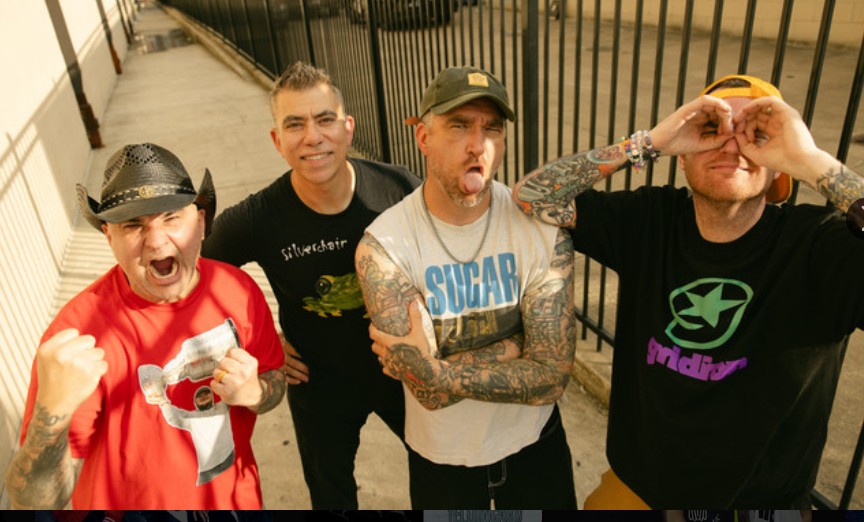
As New Found Glory can attest, life moves quickly. Just three years after forming in Coral Springs, Florida, in 1997, the group were fast-tracked from local upstarts to mainstream stars on the back of ebullient pop melodies and hardcore-tinged breakdowns, setting off a blast of pop-punk dynamite that still lights the torch for modern acts more than two decades later. They became the voice of an underground movement, spurring iconic gold and platinum records (2000’s New Found Glory, 2002’s Sticks & Stones, and 2004’s Catalyst), countless MTV appearances, an entire subgenre (easycore) and sold-out tours the world over.
But, as the band have also learned, everything can get upended in the blink of an eye. In December 2021, fresh off the celebratory Pop Punk’s Still Not Dead Tour in support of their 10th album, Forever + Ever x Infinity, guitarist Chad Gilbert was found unresponsive in bed at home, rushed to a local hospital, and diagnosed with an 8-inch cancerous tumor, a rare pheochromocytoma. Hospital stays, surgery, and a long road to recovery followed – but, in typical New Found Glory fashion, so did the songs.
The band’s new acoustic album, Make The Most Of It (Revelation Records), tackles the last year head-on with their most emotional and cathartic collection of songs to date. The album is a rumination on what it means to grieve, to live, to approach every day with appreciation and a sense of fulfillment.